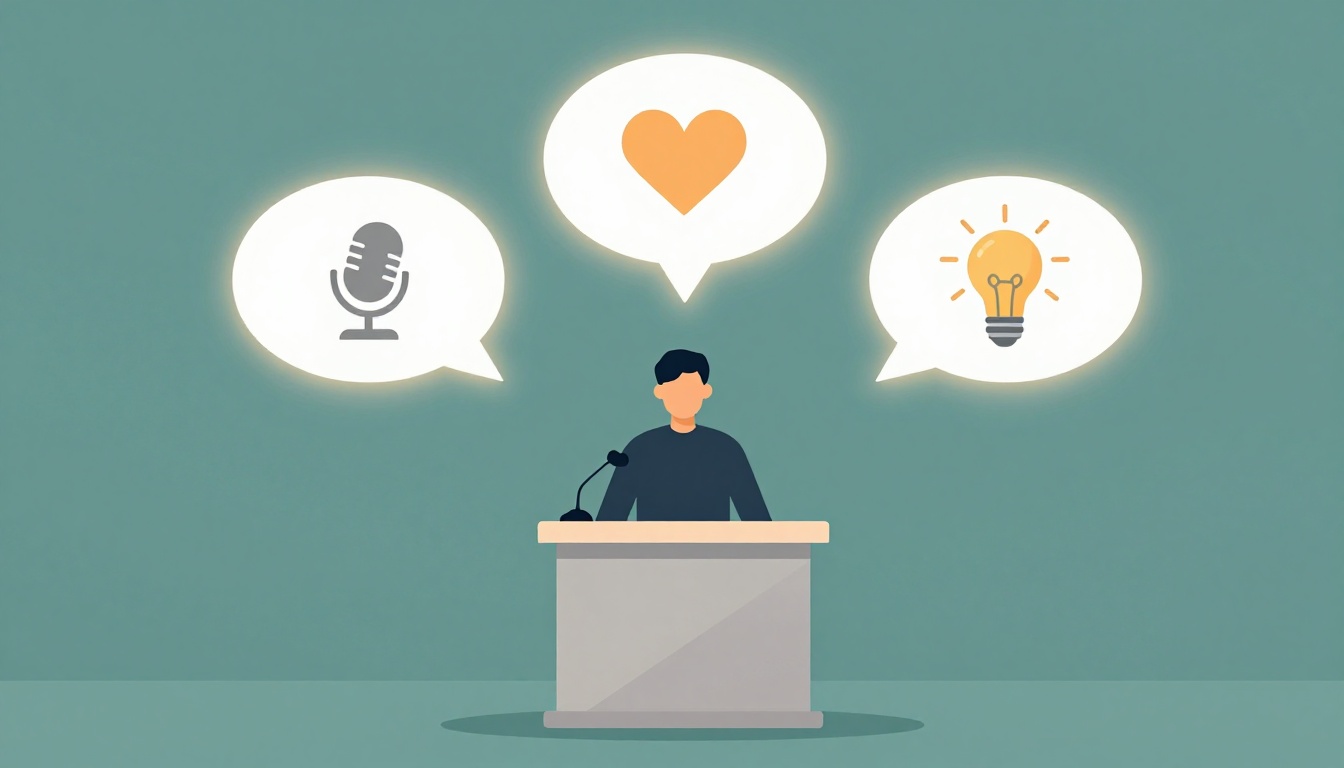
Picture this. You sit through a dull speech full of facts and lists. It ends, and you forget every word five minutes later. Now imagine another talk. One line hits: “Friends, Romans, countrymen.” It sticks forever because of its rhythm.
That’s the Rule of Three. You group ideas in sets of three for punch and recall. Studies show people remember triples 40 percent better than other patterns. Brains crave that balance.
This post breaks it down. You’ll learn its roots, why it works, hands-on ways to apply it, real examples from pros, and tips to avoid pitfalls. By the end, your next speech will linger in minds long after you finish.
Unpack the Rule of Three: From Ancient Roots to Everyday Wins
The Rule of Three works as a simple speaking tool. You list or group points in threes. This creates rhythm and makes messages stick. Speakers use it because it feels complete, not scattered.
Three hits the sweet spot. Two feels like a choice; four overwhelms. Aristotle spotted this in rhetoric. He said triples bring balance and power to words.
Today, it powers talks everywhere. From boardrooms to weddings, threes grab attention. Next, see its history in action.
Spot Its Origins in Timeless Speeches
History brims with triples. Julius Caesar wired home: “I came, I saw, I conquered.” Those three verbs capture victory in seconds.
The U.S. Declaration nails it too. “Life, liberty, and the pursuit of happiness.” This trio stirs emotion across centuries. Each word builds on the last.
Speakers then and now rely on these. They pack feeling into few syllables. You can do the same.
See Threes Hiding in Plain Sight Around You
Threes pop up daily. Think “ready, set, go” at races. Or “stop, drop, and roll” for fires. These stick because brains love the beat.
Ads use them. “Reduce, reuse, recycle” guides habits fast. Stories follow suit. Three little pigs face wolf trials.
Speakers borrow this. They tap what audiences already know. As a result, points land harder.
How Threes Trick Your Brain into Remembering More
Brains seek patterns. Three creates a drumbeat: first sets up, second contrasts, third resolves. It feels right.
George Miller studied memory in the 1950s. He found we hold about seven chunks short-term. But three shines for speeches. It avoids overload.
Pairs fall flat; they seem binary. Longer lists blur. Threes build tension then pay off. Like Goldilocks: too hot, too cold, just right.
Fairy tales prove it. Three bears, three wishes. Your talks can mimic this flow. Therefore, audiences recall more.
Craft Speeches That Stick: Hands-On Ways to Use Threes
Start in prep. Outline your talk around threes. Practice aloud for natural rhythm. Keep it brief for five-to-15-minute slots.
Focus on openings, body, and closes. Use vivid words, not dry lists. Now, try these techniques.
Hook Audiences Fast with a Triple Opener
Open strong. Say, “We’ll face fears, find fixes, claim futures.” It previews your path.
Use templates like adjective-verb-noun: “Bold steps, smart choices, big wins.” Add color to grab ears right away. Bland triples flop, so spice them up.
Anchor Your Key Message with Three Pillars
Build your core on three points. “This tool saves time, builds skills, sparks growth.” Give each one to two minutes.
Pair with slides. Three icons reinforce without clutter. Audiences nod along because it feels tidy.
Land Hard with a Triple Close or Call to Action
End with punch. “Think big, act now, win together.” Repeat it for echo.
Link to needs. “Learn skills, share stories, change lives.” It motivates and lingers.
Add Rhythm Through Triple Repetition
Repeat for emphasis. “We rise, we fight, we triumph.” Use once or twice in tales.
Build tension each time. Limit it, or it tires ears. Gestures amp the beat.
Borrow Brilliance: Iconic Speeches Nailing the Rule of Three
Pros master threes. Study these to spark ideas. Adapt them; don’t copy.
Winston Churchill’s Gritty World War II Rally
Churchill rallied Britain. “We shall fight on the beaches, we shall fight on the landing grounds, we shall fight in the fields.”
He repeats “we shall fight” three ways. It forges resolve. Each spot escalates grit.
Martin Luther King Jr.’s Vision of Justice
King dreamed big. “I have a dream” echoes eight times, but triples shine: “Now is the time to rise from hope, to make justice ring, to allow freedom flow.”
It climbs emotion. Justice feels urgent.
Modern Masters Like Steve Jobs
Jobs launched the iPhone. “It’s a widescreen iPod, a phone, and an internet communicator.”
Three benefits sell magic. Simple, direct, unforgettable.
Fine-Tune Your Threes: Pro Tips and Common Traps to Dodge
Vary phrasing for flow. Test on friends; watch for nods. Pair with pauses and gestures.
Combine types: opener plus pillars. Track reactions live.
Avoid overkill; it turns gimmicky. Balance points evenly. Check culture; some groups prefer pairs.
Practice drill: Rewrite an old speech. Add threes, time it. One change boosts recall forever.
The Rule of Three offers simple power. Brains back it, pros prove it. You’ll craft talks that echo.
Pick one tip. Use it next time. Share your wins in comments.
Grab our free speech checklist below. Your words matter; threes make them stick.